For decades, audible altimeters have communicated with skydivers using a remarkably sophisticated language:
BEEP. BEEP BEEP. BEEEEEEEEEP.
And somehow, we've all learned to understand it. Three short beeps? Probably breakoff. One long beep? Hopefully you know what that one means. A weird sound you've never heard before? Well, that's a problem for Future You.
But audible altitude awareness is changing. The latest generation of skydiving electronics is moving beyond simple tones and alarms and into something much more intuitive: spoken altitude information. Yes, the Voice Audible Altimeter Madness has officially begun. Skydivers can now have an actual voice inside their helmet announcing altitude, providing jump-specific information, and in some cases communicating information from other devices in an integrated ecosystem.
There is a conversation that happens at almost every drop zone, but rarely out loud. A skydiver walks in after weeks, or even months, away from the sport. They smile, catch up with friends, check the weather, and start putting on their gear.
On the outside, everything looks normal. On the inside, they're wondering: "Why am I so nervous?" Or even worse… "Do I even like skydiving anymore?"
If you've ever had those thoughts, you're not alone. In fact, I would argue that nearly every experienced skydiver has experienced them at some point. The difference is that most don't talk about it because there's an unspoken expectation that experience should eliminate fear. It doesn't.
Colton Reynolds (best damn packer ever) at the 2026 Fitz Boogie. Photo by Ann Durand (Tandem & AFF Instructor).
Fear Doesn't Disappear, It Changes When we're students, our fear is obvious. We're afraid of leaving the airplane. We're afraid of making mistakes. We're afraid of the unknown. As we gain experience, those fears evolve. We become more comfortable with freefall and canopy flight, but we also gain something else: perspective.
There comes a point in many skydivers' careers when they begin looking for a way to give back to the sport. For some, that path leads to coaching, AFF instruction, rigging, or organizing events. For others, it leads to one of the most challenging and rewarding roles in skydiving: becoming a Tandem Instructor.
The decision to become a Tandem Instructor is not one to take lightly. You are taking responsibility for introducing thousands of people to the sport while carrying the weight of their trust, safety, and often one of the most important experiences of their lives.
More Than Just Taking People for a Ride Many outside the sport assume tandem instructors simply strap someone to their chest and jump out of an airplane. The reality is far different.
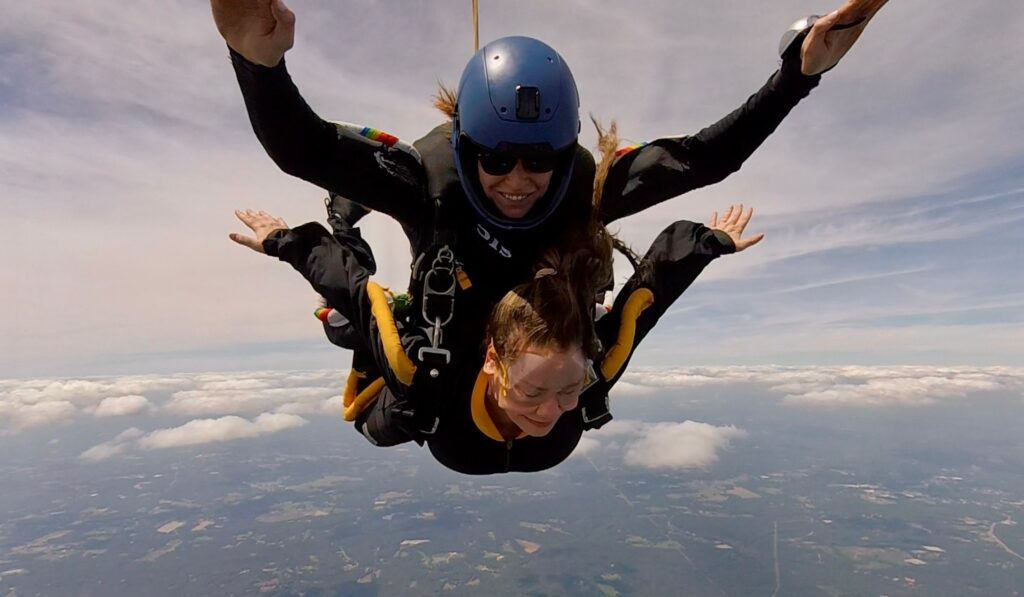
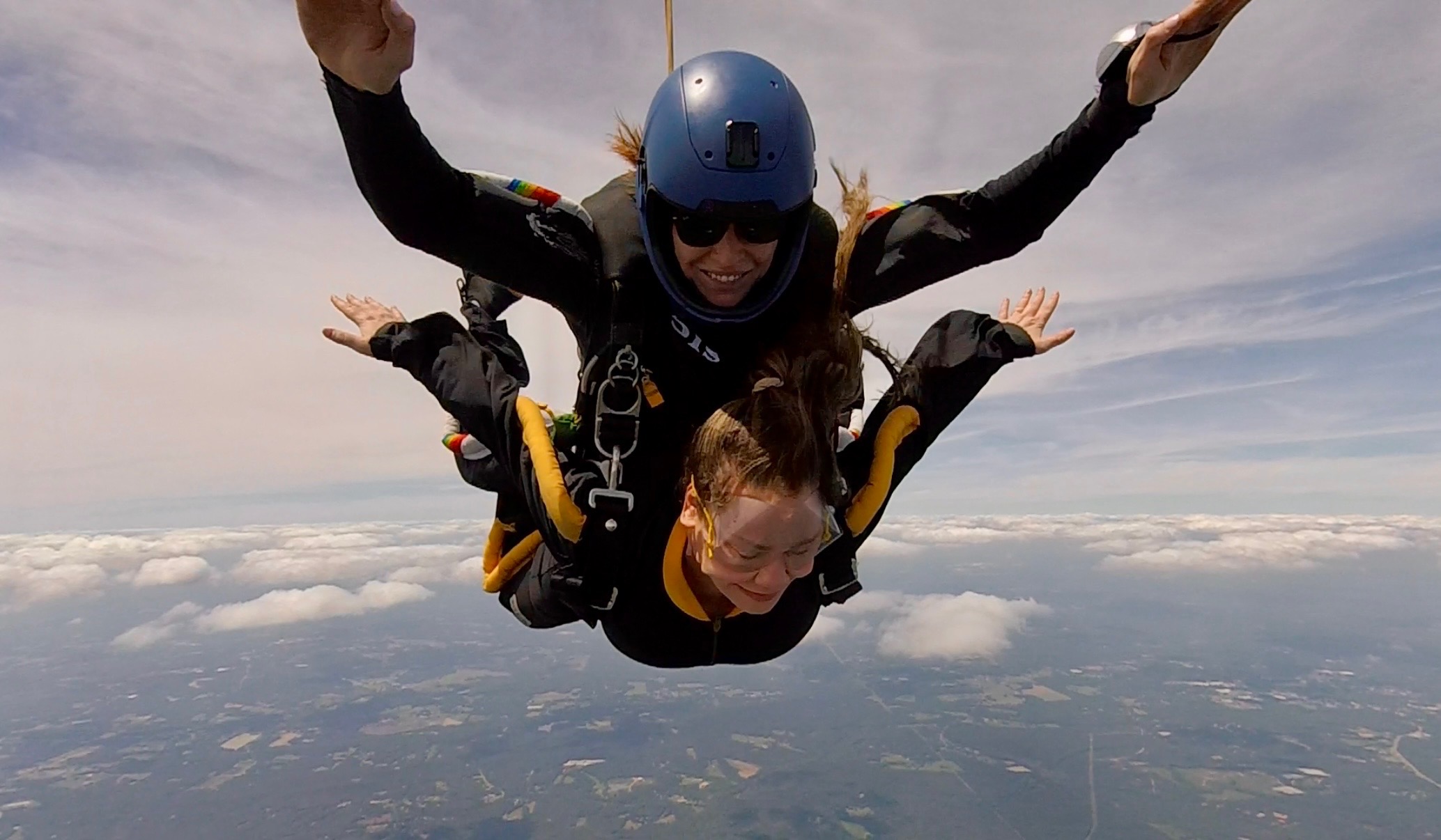
Tandem Instructor Ann Durand over Skydive Atlanta. Photo by Gary Schaffer.Continue reading →
Why do you skydive? It can be an uncomfortable but necessary question.
Skydiving has never been more accessible. Better gear, faster training pipelines, endless online content, and social media highlight reels have lowered the barrier to entry in ways we couldn’t have imagined 20 years ago. That’s not inherently bad—but it can come with unintended consequences.
Complacency is a slow erosion of respect for the sport. A new generation of jumpers who sometimes don’t fully understand why they’re stepping out of an aircraft in the first place.
This isn’t about gatekeeping. It’s about self-awareness, safety, and longevity in a sport that is brutally honest when mistakes stack up. So, let’s ask the question most people never stop revisiting:
Skydiving. For many of us it’s freedom, adrenaline, and pure joy. But behind every jump that feels effortless are countless hours of training, repetition, and a commitment to safety.
That’s why coaching matters. Whether you’re new to the sport or a seasoned jumper, coaching can keep you improving... and alive.
Coaching is critical in skydiving in how it helps both new and experienced jumpers build skills while keeping safety front and center.
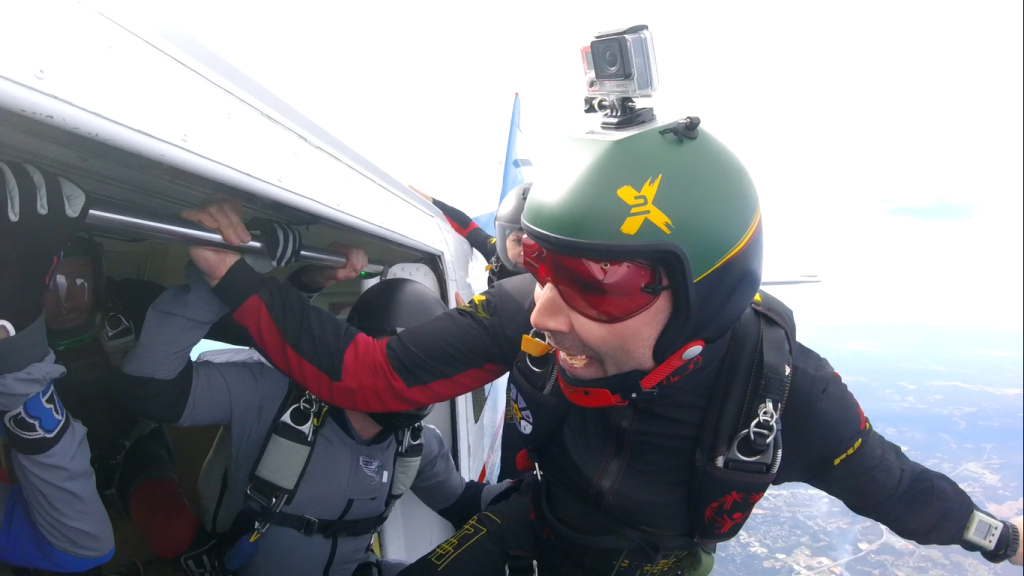
Henry coaching above Skydive Monroe. Photo by Albalia Perez De Kochen.Continue reading →
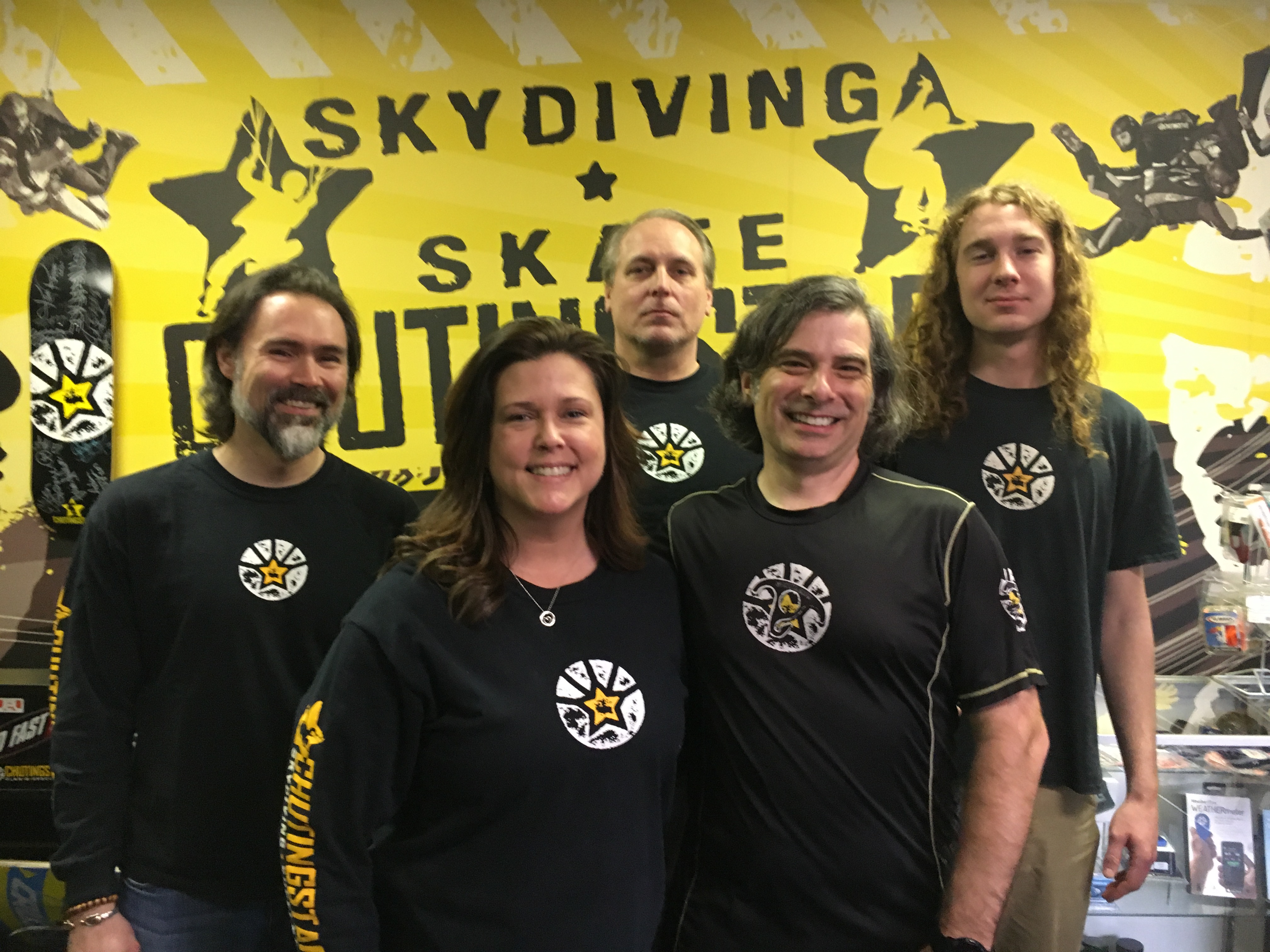
While ChutingStar may seem to some like some huge corporate monster of a company, we are a group 7 people serving the skydiving community out of one location in Marietta, Georgia. For the most part, we're available 24/7 in some manner be it in the shop, on the phone or online.
Since 1999, we've mostly been able to provide seamless support by staggering breaks for our staff and covering for each other's "specialty" so that you rarely know when one or two of us are gone for a few days.
Many skydiving manufacturers have a summer and a winter shutdown that may be a week or more. ChutingStar has always stayed open during those times to support skydivers with info, advice, parts and gear. That will be changing slightly this year.
For 2026, there will be a couple of staff breaks to give our group a breather. This will delay custom orders processing and some shipments, but we've scheduled these breaks around holidays and manufacturer shutdowns where we are limited in what we can do at that time anyway.
There’s something about swooping that pulls every skydiver in. The sound, the speed, the precision; it’s art in motion. A perfectly executed turn and a mirror-smooth pond carve? That’s skydiving poetry.
But lately, I’ve noticed more and more jumpers chasing the swoop for all the wrong reasons. It’s become less about mastering the craft and more about chasing clout, downsizing too soon, copying what they see on Instagram, or just trying to look cool on landing. And that’s when people get hurt. It's “The YouTube effect.”
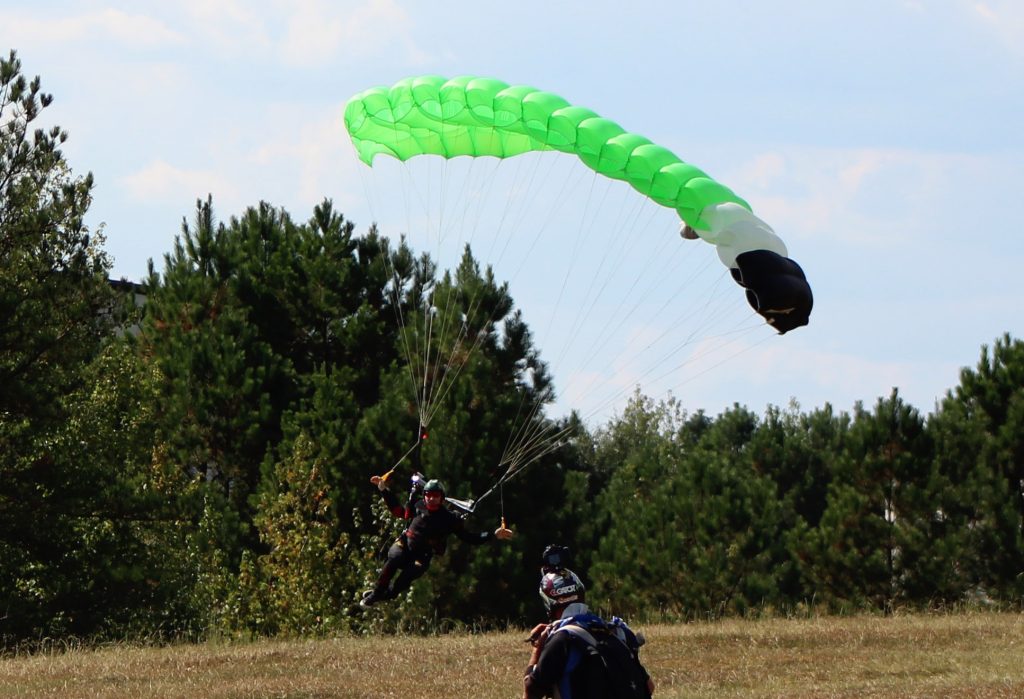
Henry carving in on a swoop at Skydive Monroe. Photo by Albalia Perez De Kochen.Continue reading →
A 20-Year Journey of Growth, Safety, and Complacency
Over the last two decades, skydiving has evolved significantly, transforming from a niche thrill-seeking activity into a widely accessible and increasingly safe sport. From improved equipment technology to enhanced training protocols, the sport has made remarkable strides. However, amid this progress, a concerning trend has emerged: complacency among experienced skydivers and a lack of respect for the inherent risks of the sport. This is resulting in an unfortunate retrogression—more experienced skydivers getting injured or even killed, while newer participants neglect the importance of vigilance, discipline, and respect for safety.
The Growth of Skydiving: A Safer Sport
Skydiving has experienced exponential growth over the past 20 years. What was once seen as an extreme sport reserved for a select few has now become increasingly accessible to a broader audience. In 2000, skydiving was largely a sport for adrenaline junkies and military personnel, with the equipment and training far from the streamlined, professional systems we see today. However, advances in equipment technology and training have made skydiving more reliable and safer.
One of the major factors contributing to the sport's safety is the development of modern parachutes. The introduction of “square” or “ram-air” canopies, which are far more stable and predictable than the old round ones, revolutionized how skydivers navigate and land. These canopies are designed to offer better control, making the landing process less perilous.
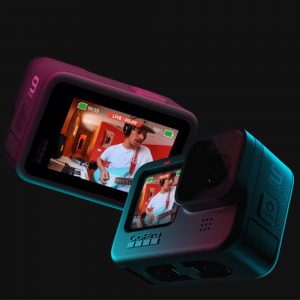
The GoPro HERO9, HERO10, HERO11, HERO12 & HERO13 Black cameras are slightly bigger all the way around compared to prior GoPro versions. So make sure you have the correct mount for your skydiving helmet!
First-off the HERO9/10/11/12/13 can mount to any mount that attaches to the bottom GoPro attachment spindles. This means the Vmag system can be used right now for your HERO9/10/11/12/13 on a Cookie G4, G3, KISS or Skyhelmet Funjin.
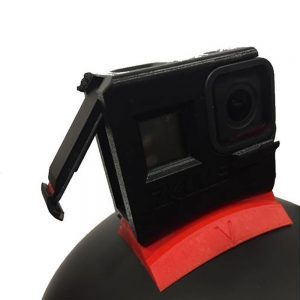
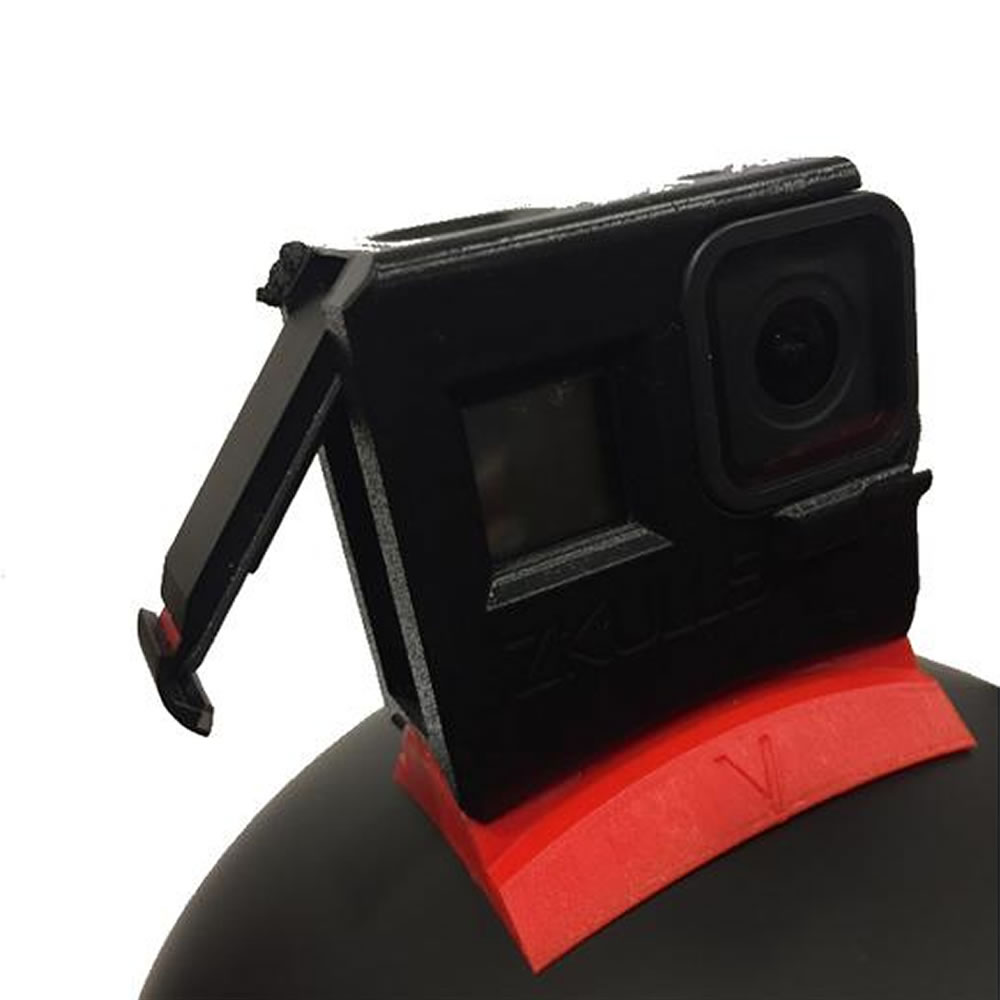
There also is a HERO9/10/11/12/13 top mount option available from Zkulls for TFX, G3, G35 and G4 with a cutaway option, and Cookie has it's HERO9/10/11/12/13 Roller. We're talking with the other helmet mount manufacturers that use a base cradle or cage, to add more HERO9/10/11/12/13 mounts.
Helmet and camera mount manufacturers continue to stay on top of giving you plenty of options for a wide range of mounting options for just about any current GoPro camera.
Below are the most popular available options from ChutingStar for mounting a camera to a Cookie G4, Tonfly TFX and KISS helmet.
Please keep in mind that the G4 helmet does not have a cutaway system, and the helmet is tighter to get in/out of than the G3. So take that into account when choosing a mounting system. Some have a cutaway or breakaway feature, while others don't. Same for TFX and KISS helmets.
One other note is that drilling into the G4 helmet does void the impact protection rating. So keep that in consideration on your mount choice if that's important to you. See the full Cookie G4 camera mount disclaimer at the bottom of this post.