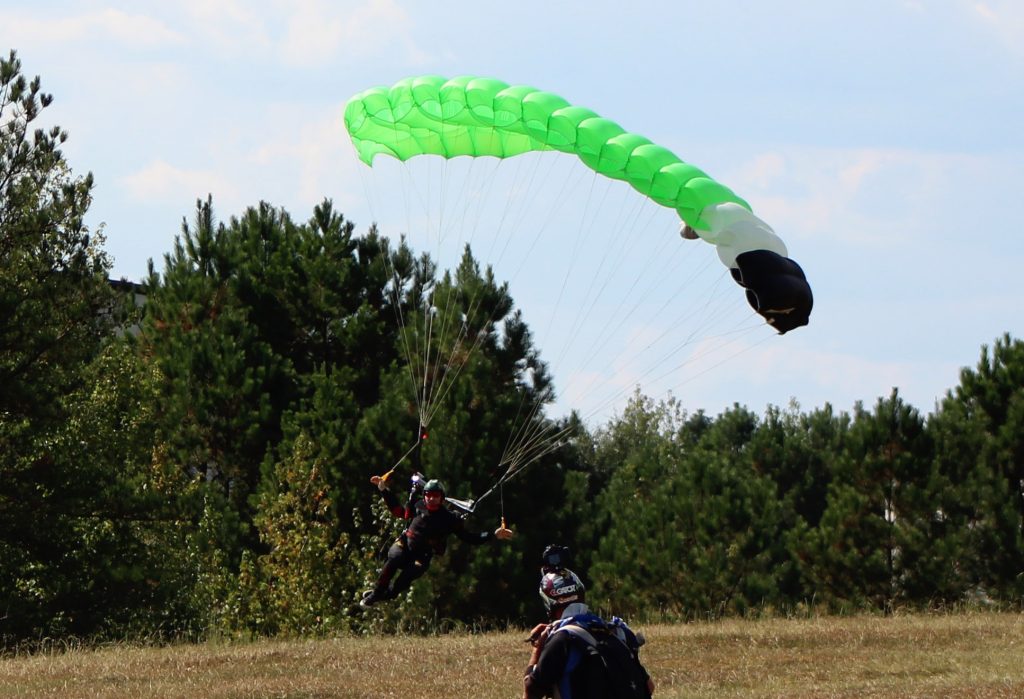
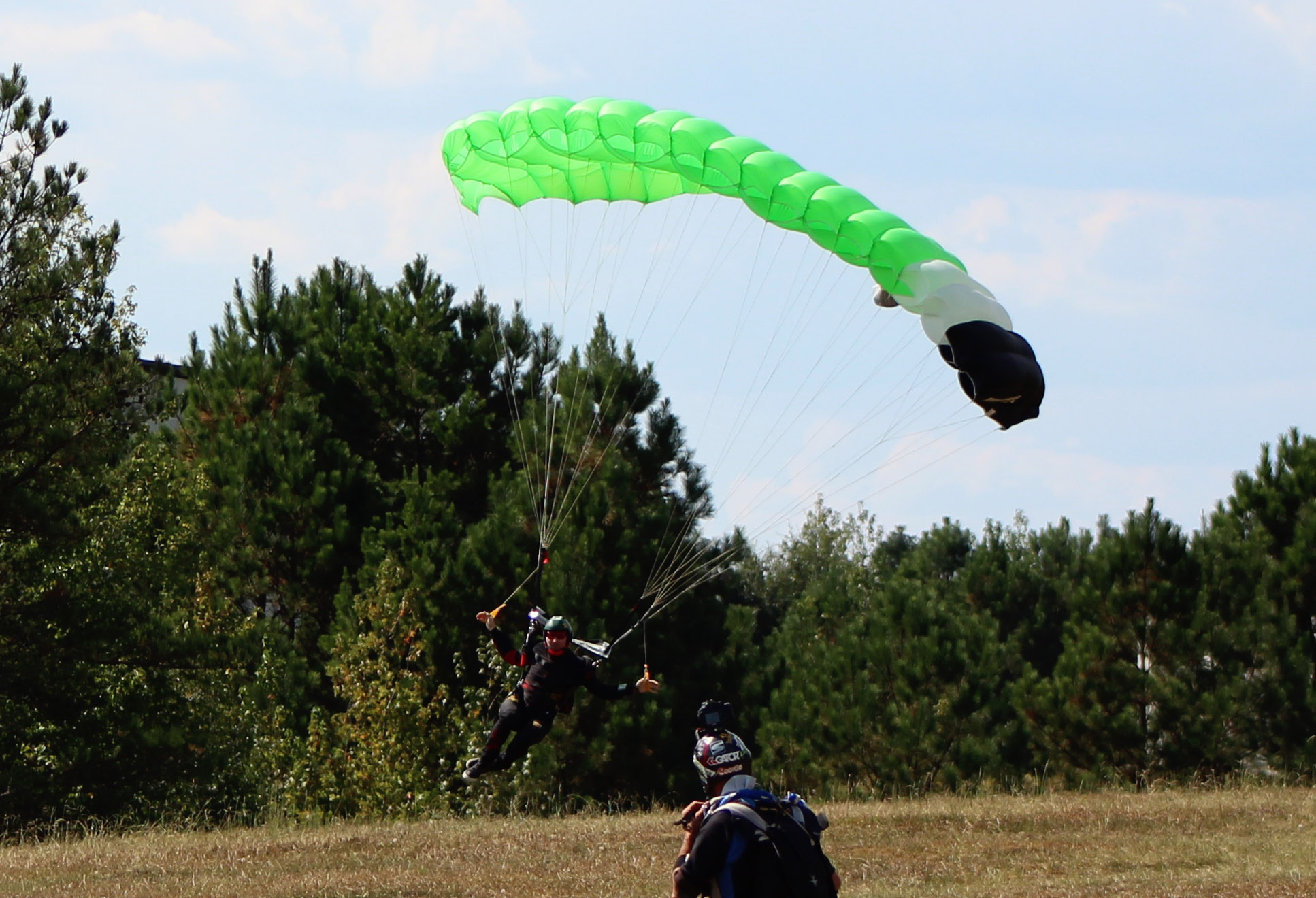
There’s something about swooping that pulls every skydiver in. The sound, the speed, the precision; it’s art in motion. A perfectly executed turn and a mirror-smooth pond carve? That’s skydiving poetry.
But lately, I’ve noticed more and more jumpers chasing the swoop for all the wrong reasons. It’s become less about mastering the craft and more about chasing clout, downsizing too soon, copying what they see on Instagram, or just trying to look cool on landing. And that’s when people get hurt. It's “The YouTube effect.”
Henry carving in on a swoop at Skydive Monroe. Photo by Albalia Perez De Kochen.Continue reading →
A 20-Year Journey of Growth, Safety, and Complacency
Over the last two decades, skydiving has evolved significantly, transforming from a niche thrill-seeking activity into a widely accessible and increasingly safe sport. From improved equipment technology to enhanced training protocols, the sport has made remarkable strides. However, amid this progress, a concerning trend has emerged: complacency among experienced skydivers and a lack of respect for the inherent risks of the sport. This is resulting in an unfortunate retrogression—more experienced skydivers getting injured or even killed, while newer participants neglect the importance of vigilance, discipline, and respect for safety.
The Growth of Skydiving: A Safer Sport
Skydiving has experienced exponential growth over the past 20 years. What was once seen as an extreme sport reserved for a select few has now become increasingly accessible to a broader audience. In 2000, skydiving was largely a sport for adrenaline junkies and military personnel, with the equipment and training far from the streamlined, professional systems we see today. However, advances in equipment technology and training have made skydiving more reliable and safer.
One of the major factors contributing to the sport's safety is the development of modern parachutes. The introduction of “square” or “ram-air” canopies, which are far more stable and predictable than the old round ones, revolutionized how skydivers navigate and land. These canopies are designed to offer better control, making the landing process less perilous.