

Becoming a Skydiving Tandem Instructor
(Written by ChutingStar's Henry Kochen.)
There comes a point in many skydivers' careers when they begin looking for a way to give back to the sport. For some, that path leads to coaching, AFF instruction, rigging, or organizing events. For others, it leads to one of the most challenging and rewarding roles in skydiving: becoming a Tandem Instructor.
The decision to become a Tandem Instructor is not one to take lightly. You are taking responsibility for introducing thousands of people to the sport while carrying the weight of their trust, safety, and often one of the most important experiences of their lives.
More Than Just Taking People for a Ride
Many outside the sport assume tandem instructors simply strap someone to their chest and jump out of an airplane. The reality is far different.
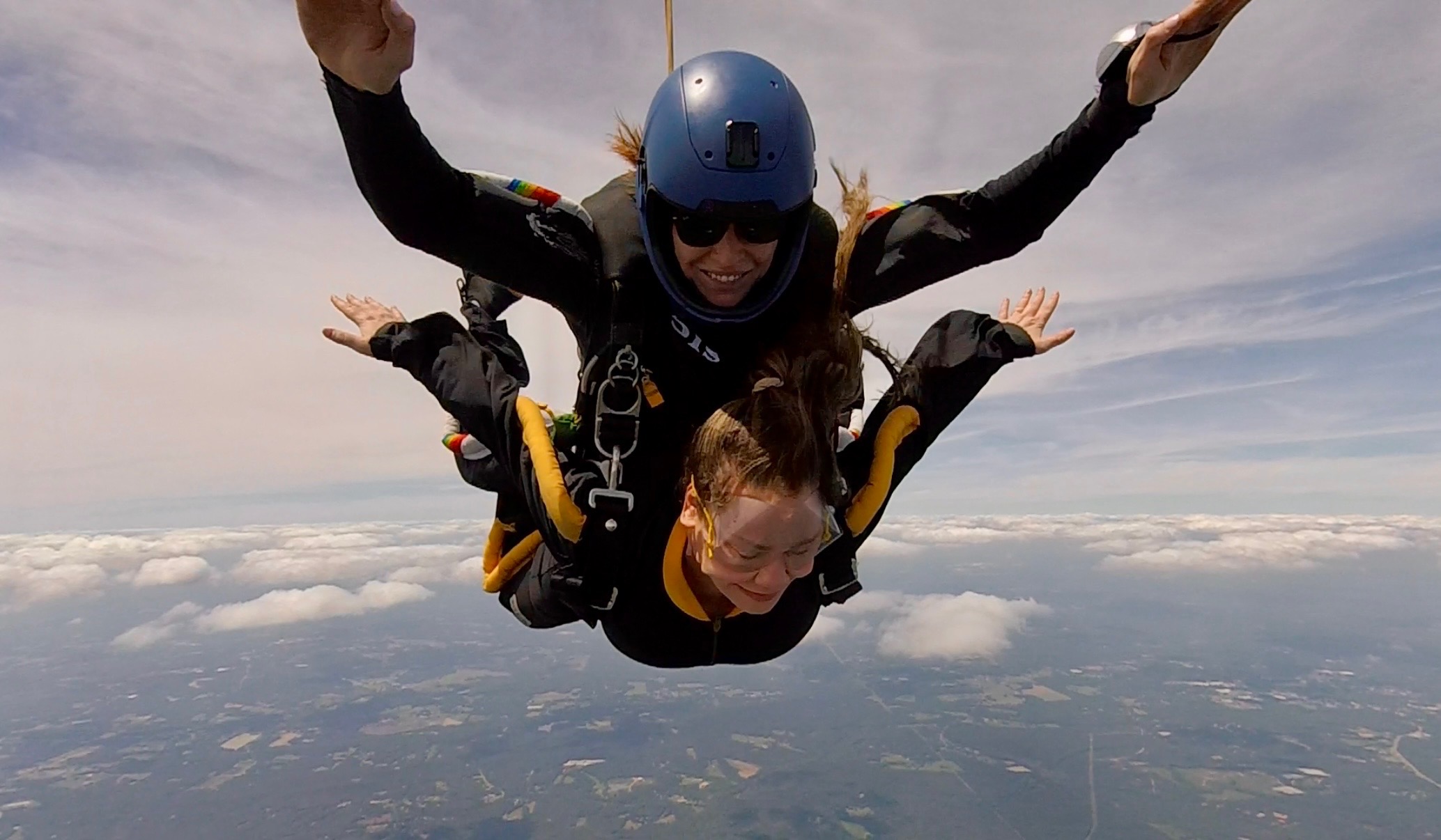
A Tandem Instructor is a teacher, safety professional, equipment expert, customer service rep, and mentor, all at the same time. Every student arrives with a unique story. Some are celebrating a birthday, anniversary, graduation, or retirement. Others are overcoming fears, honoring loved ones, or checking a lifelong dream off their bucket list.
As a Tandem Instructor, you become part of those stories.
The Path to Becoming a Tandem Instructor
The requirements vary depending on the country and training organization, but the journey generally starts with experience. Before carrying another person in freefall, you must first demonstrate consistency, judgment, and maturity as a skydiver.
Most tandem certification programs require:
- A minimum number of jumps.
- Several years of experience in the sport.
- A current instructional rating or equivalent qualifications.
- Strong canopy piloting skills.
- Medical clearance and physical fitness.
- Completion of a tandem instructor certification course.
Information on Tandem Instructor requirements for the United States, can be found in the USPA Instructional Rating Manual, available at this link.
The course itself is demanding. Candidates are evaluated not only on their flying skills but also on their ability to communicate, solve problems, manage emergencies, and maintain professionalism under pressure. Passing the course is just the beginning.
The Physical Challenge
Tandem instruction is physically demanding. A busy weekend can involve carrying equipment all day, lifting student harnesses, boarding aircraft repeatedly, handling large canopies, and making multiple jumps under varying weather conditions. Many instructors finish a long summer weekend feeling like they've completed an athletic event.
Physical fitness isn't just about comfort, it contributes directly to safety, endurance, and decision-making throughout the day.
It's Not About Size or Strength
One of the biggest myths in skydiving is that you must be a large, exceptionally strong person to become a successful Tandem Instructor.
The reality is that tandem instruction is far more about technique, awareness, preparation, and following procedures than raw physical strength. Proper body positioning, efficient equipment handling, good communication, and sound decision-making are what make a great Tandem Instructor. Learning how to work smarter—not harder, is a skill that every instructor develops over time.
In recent years, more women skydivers have been pursuing tandem instructor ratings and proving that skill, professionalism, and attention to detail matter far more than size or muscle. Many have become highly respected instructors who consistently demonstrate exceptional student interaction, equipment management, and instructional abilities.
The sky doesn't care of your gender. What matters is your training, your judgment, your commitment to safety, and your ability to provide students with a safe and unforgettable experience. The best tandem instructors aren't defined by their physical size; they're defined by their competence, confidence, and professionalism.
The Mental Responsibility
The greatest challenge isn't physical; it's mental. Every tandem student is placing their life in your hands.
That responsibility requires constant attention to detail. Equipment inspections, aircraft procedures, weather evaluation, student briefings, emergency procedures, and canopy decisions must become second nature.
Complacency is the enemy. The best tandem instructors never stop learning, reviewing procedures, and refining their skills.
Creating Future Skydivers
One of the most rewarding aspects of tandem instruction is seeing students return. Many licensed skydivers made their very first jump attached to a Tandem Instructor who inspired confidence and excitement.
The way you conduct yourself during those few minutes can influence whether someone walks away with a great memory, or discovers a lifelong passion for skydiving. Every AFF Instructor, Coach, S&TA, Rigger, Camera Flyer, and Organizer started somewhere. For many, that first experience was a tandem skydive. As a Tandem Instructor, you help develop the future of the sport.
Conquering Fears Together
Few experiences compare to watching a nervous student transform after landing. The person who was shaking on the ground often lands with a smile that lasts for days. Some students arrive terrified of heights. Others struggle with anxiety or self-doubt. Many are convinced they won't be able to do it. Then they step out of the aircraft.
Helping people overcome those fears is one of the most meaningful rewards of tandem instruction.
It's Not About the Jump Numbers
Successful tandem instructors are not measured solely by how many jumps they complete. They're remembered for their professionalism, patience, judgment, and commitment to safety.
The best instructors understand that every student deserves the same attention and care, whether it's the first jump of the day or the last jump of a long weekend.
Is it worth it? Absolutely.
The path is demanding. The training is challenging. The responsibility is significant. But few roles in skydiving offer the opportunity to impact so many lives in such a positive way.
Every tandem jump is a chance to introduce someone to the sky, help them overcome fear, create a lasting memory, and perhaps even spark a lifelong passion for aviation and skydiving.
Becoming a Tandem Instructor isn't simply about taking people skydiving. It's about becoming the person who helps others discover that they are capable of more than they ever imagined.
To me, taking people on tandems is being a part of someone’s first jump, that is what keeps me looking forward to the next one.
More info on the history of tandem jumping is available in a new book by Jen Sharp, Ph.D. and Bill Morrissey, available at this link.
Henry Kochen (Skydiving Instructor, Rigger, and Gear Nerd at ChutingStar) has 4700+ jumps and is an FAA Senior Rigger, USPA Coach, USPA Tandem Instructor and Videographer. He joined the ChutingStar Crew in 2015. He can be contacted directly at [email protected].