In 2002, several instructors from Skydive Illinois took up residence in Atlanta and made Atlanta Skydiving Center their new home. An influx of new staff of course brings new ideas, skills, attitudes, and even gadgets. And the one gadget that is starting to catch on is the Suunto watch with altimeter.
Suunto does not advertise in the skydiving industry, but the altimeter function of its watch is easy to read and operate. It also keeps up with the change of altitude in real time as fast as any other digital altimeter I have ever used. I've since put it in an altitude chamber next to a Neptune2 and found it to be within 100 feet at every moment. Continue reading →
One of the most asked questions on the Alti-2 N3 and N3A is the life of the rechargeable battery. Here's what the company says on the battery lifespan:
Alti-2, the manufacturer of the N3 Audio has recently investigated customer reported issues with the N3 Audio.
Here is what they have found:
The maximum power drain of the N3 Audio is higher than the N3, which means that the battery must be in a higher charge state. Continue reading →
Past posts on rigging forums at one time focused on one manufacturer's solution to keeping a collapsed slider at the base of the risers after opening without anchoring the slider to the container. Many jumpers have concerns about a number of slider holders that connect the slider to the top of the reserve container, which could potentially cause a cutaway delay.
When Team Method (Steve-O Utter, T.J. Landgren and Nate Gilbert) arrived at Atlanta Skydiving Center in 2001, the freefly team showed-off a new slider block design. Over the next few years, ChutingStar riggers tweaked and modified the design for strength, durability and aesthetics.
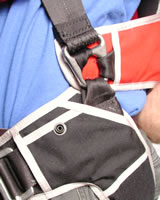
Mirage Systems International recently released a 4-ring harness called Unisyn. The company is touting its design as being better than others on the market (and I will reprint their reasons later in this article), but what I really like about the design is the padding attachments under the four rings.
The two chest rings and the two hip rings have padding between the wearer and the rings. So in addition to providing a better overall fit, the harness itself is more comfortable to wear. For those looking to purchase a high-quality rig with all the extras, I recommend going the extra mile and adding the Unisyn option; it is well worth it at $300.
(Published in Blue Skies Magazine)
If the "small things" in life grab you, then you'll be taken by the Seven. This French-made rig is the brainchild of Basik Air Concept's Jérôme Bunker.
Basik's Seven container has a minefield of surprises for skydivers and riggers alike. I assembled, inspected and packed my first Seven container last month, and was impressed by the attention to detail and the several of the design features.
As a rigger, my first “Aha!” was with the full protection pocket for the AAD cutter at the base of the reserve container. In essence this keeps the entire cutter enclosed, allowing just the hole open to feed the closing loop through. It’s a clear concept change from the usual elastic keeper in most rigs to hold the base of the cutter in place, but leaving the rest of the cutter and some of the cable exposed as a possible snag point for reserve lines. Continue reading →
Several years ago, Dolphin container designer, Mike Furry, updated the most affordable sport skydiving container on the market making the newest Altico Dolphin rigs even more freefly friendly.
Older Dolphin containers were definitely made with affordable in mind. Dolphin containers have long been a solid choice for student operations, belly fliers and new skydivers looking for a well-designed new rig at a used gear price. But as freefly positions have become a mainstay of the skydiving industry, Mike Furry has had to update and modify the Dolphin container to keep those higher skydiving speeds in mind.
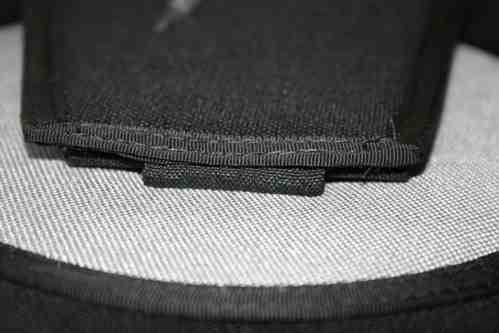
Elastic keepers come in two sizes: 1" and 1 22/32". The 1" is used on Type 17 webbing. 1 22/32" elastic keepers are used on Type 7 and Type 8 webbing. Elastic keepers are made out of a 1" elastic, trimmed out with Type III tape, double-needle seam and a zig-zag stitch.
Inspect the full main closing loop. Take the loop out of the main closing loop retainer and grommet. Inspect where the washer rests for any damage. Inspect where the loop passes through the grommet for any damage. Inspect the loop itself. Feel the grommet and washer for sharp edges.
Make a new loop to the desired length with two overhand knots to secure behind the washer. Replace the loop back into the grommet and into the main closing loop retainer. Check that the main closing loop retainer is in good condition and secure. Do a final inspection on the exposed main closing loop. Close the container and go jump! Continue reading →
The Mirage data label is located inside the pocket behind the right mud flap. Pull the label out with the red tab. The label will have the DOM, size, SN, TSO and similar info.
The packing data card is located in the same pocket or in a pocket on the backside of the label. The packing data card has all the container, reserve and AAD info.