
Swooping Deserves Respect, Not Ego
(Written by ChutingStar's Henry Kochen.)
There’s something about swooping that pulls every skydiver in. The sound, the speed, the precision; it’s art in motion. A perfectly executed turn and a mirror-smooth pond carve? That’s skydiving poetry.
But lately, I’ve noticed more and more jumpers chasing the swoop for all the wrong reasons. It’s become less about mastering the craft and more about chasing clout, downsizing too soon, copying what they see on Instagram, or just trying to look cool on landing. And that’s when people get hurt. It's “The YouTube effect.”
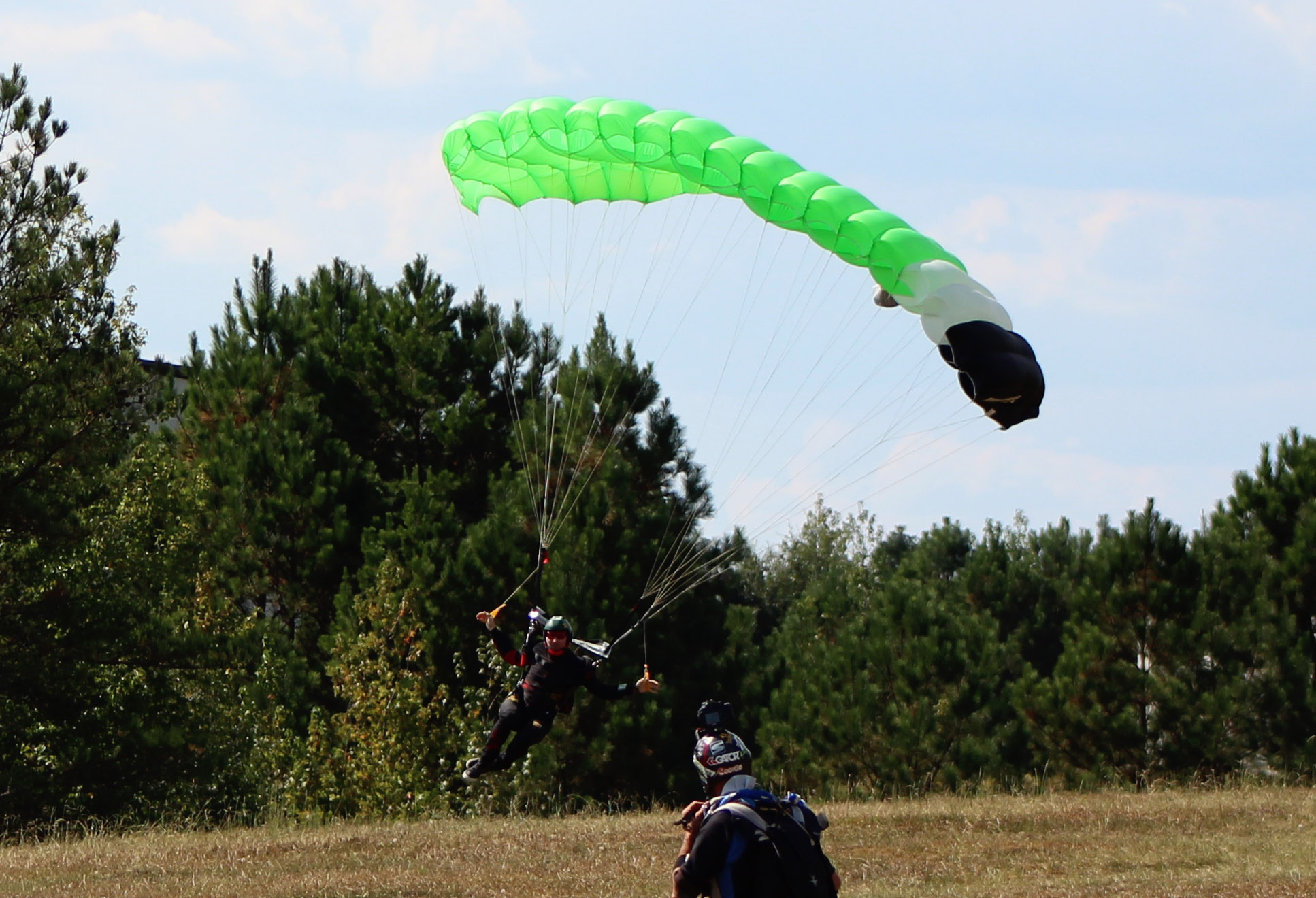
Swooping is a Discipline. Not a Trick
Let’s start here: swooping isn’t just a faster way to land. It’s its own discipline, just like freefly, wingsuiting, or CRW. And like any real discipline, it demands respect, progression, and time.
The best canopy pilots didn’t just throw themselves under a 67 Sqft. after a season on a Sabre 2 150. They spent years learning how to feel the wing, how to use harness input, how to read the wind, and how to walk the edge of control without crossing it. Every line twist, off-heading, or low turn they survived taught them something. They built muscle memory and judgment, jump by jump.
When you skip those steps, you’re not just taking a shortcut, you’re playing Russian roulette with nylon.
The New Age of Impatience
There’s a trend that worries a lot of us instructors and riggers: people downsizing because “my buddy did,” or “it felt too floaty.” I get it, everyone wants that crisp, powerful swoop. But too many jumpers are treating canopy size progression like a video game level-up instead of a skill-based process.
It’s not just ego, sometimes it’s misinformation. People see pros in competition canopies and assume that’s what it takes to be “good.” What they don’t see are the thousands of jumps, structured canopy courses, flight data analysis, and deliberate progression those pilots went through to get there.
And now, we’re seeing the fallout: more low turns, more hospital rides, and more “it happened so fast” stories. The numbers don’t lie.
The Ripple Effect
Every swooping incident doesn’t just affect the jumper. It hits the whole community. Dropzones get nervous. Pond areas get shut down. Canopy restrictions tighten up. Insurance rates rise. And those of us who’ve been in the sport long enough can see where this road leads to losing one of the most incredible disciplines we have.
That’s why this isn’t just about you. It’s about preserving swooping for everyone who truly respects it.
The Right Way to Do It
If you really want to swoop, awesome. Do it right.
Take every canopy course you can. Fly the hell out of what you have before you downsize. Use tools like digital altimeters or flight data systems to understand what’s actually happening in your turn. Find mentors who’ve been there — the ones who’ve buried friends and still love the discipline enough to teach it right.
And above all: stay humble. Swooping isn’t about flexing. It’s about control, consistency, and respect — for the wing, the air, and the process.
To conclude…
Swooping will always be one of the most beautiful things in skydiving — but only when it’s done with respect.
If you’re new to the sport, take your time. Master your current canopy. Learn from the people who’ve
been there.
Because the goal isn’t just to swoop the pond — it’s to keep walking back to it, over and over again.
Fly smart, stay humble, and respect the pond.
Henry Kochen (Skydiving Instructor, Rigger, and Gear Nerd at ChutingStar) has 4700+ jumps and is an FAA Senior Rigger, USPA Coach, USPA Tandem Instructor and Videographer. He joined the ChutingStar Crew in 2015. He can be contacted directly at [email protected].